The Mandate Has Shifted
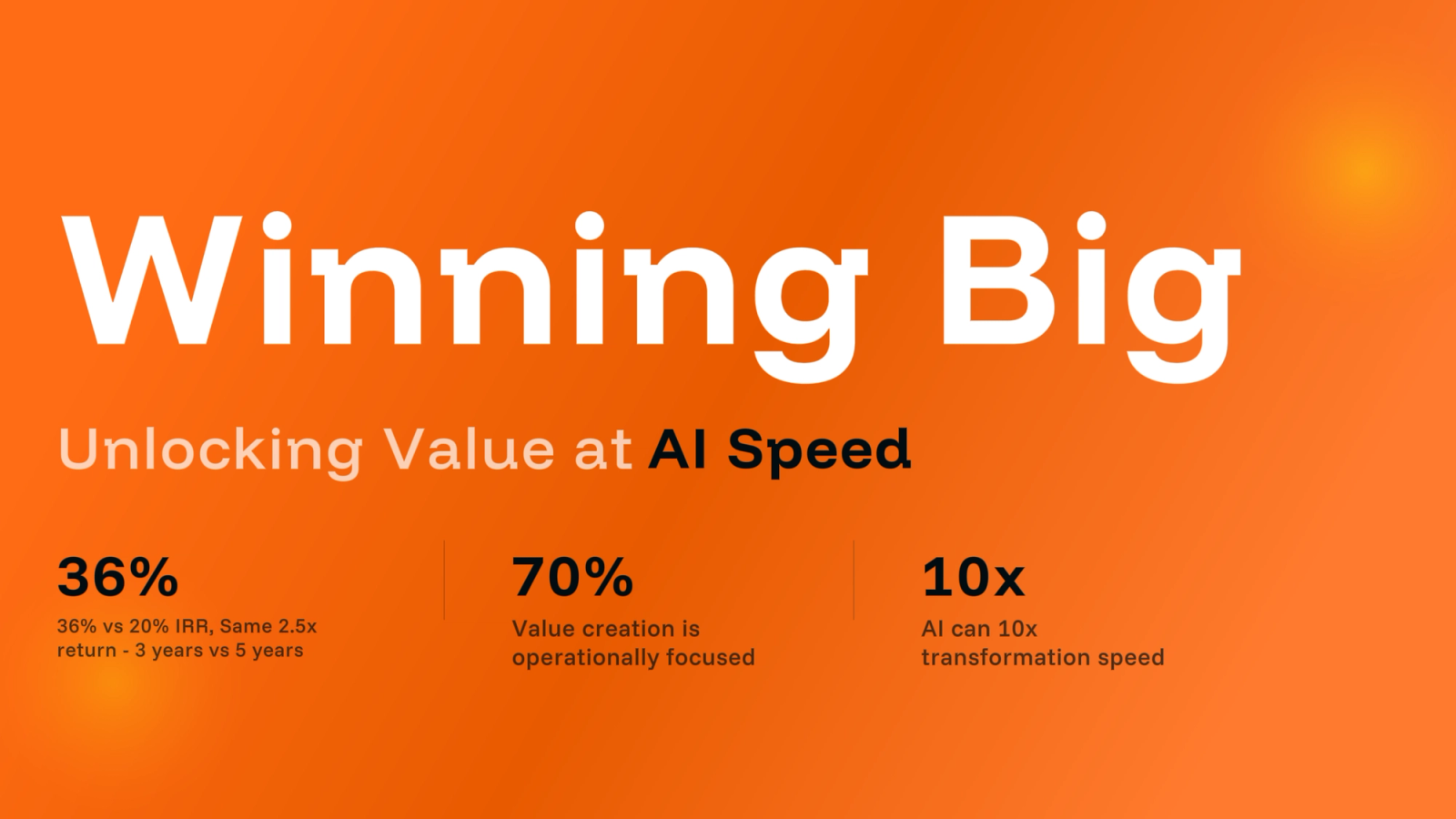
Operational improvement now drives 65–70% of value creation, up from roughly 55% just a few years ago. Financial engineering and multiple expansion have largely run their course. McKinsey’s 2025 survey shows 2.5× more LPs now rank Distributions to Paid-In Capital (DPI) as “most critical” metric compared to three years ago.
Operating Executives sit squarely at the center of fund performance, yet their tools have not kept pace.
AI as the Force Multiplier
The pressure to deliver transformation faster has outgrown human-only methods. AI is the lever that finally lets Operating Teams execute at the speed and scale the moment demands.
The Black Box Blocking Value Creation
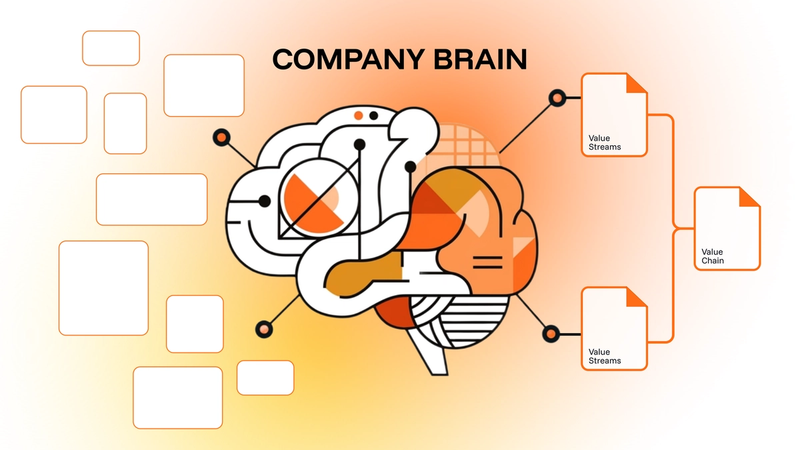
Every Operating Executive describes the same pattern: the deal closes, the plan is set, the team deploys — and then the wall hits. How the business operates is a black box: decisions, handoffs, workarounds, exceptions, tribal knowledge. You can’t restructure what you can’t see. You can’t set targets without a baseline. And you can’t deploy AI into a black box.
The human-led discovery model — interviews, workshops, shadowing — has reached its physical ceiling. A 200-person operation requires hundreds of hours of sequential conversations. You can’t make a horse gallop at car speed.
Why the Pace Must Change
More than 32,000 companies sit in PE portfolios today, representing $3.8T in unrealized value. Holding periods have stretched to seven years, with nearly 40% held for more than five. Bain’s global PE practice chairman calls it a multi-year liquidity problem that isn’t going away.
The math is unforgiving: a 2.5× return in three years yields a 36% IRR; the same 2.5× over five years yields 20%. Bain’s 2026 analysis shows deals now require 10–12% annual EBITDA growth, up from 5%, to hit target returns. Speed to discovery compounds speed to value creation. The bottleneck has always been discovery. Remove it, and the entire cycle accelerates.
Speed to discovery compounds speed to value creation. The bottleneck has always been discovery. Remove it, and the entire cycle accelerates.
From Black Box to Blueprint — in Days
AI can now do in days what human-led discovery took months.
How It Works
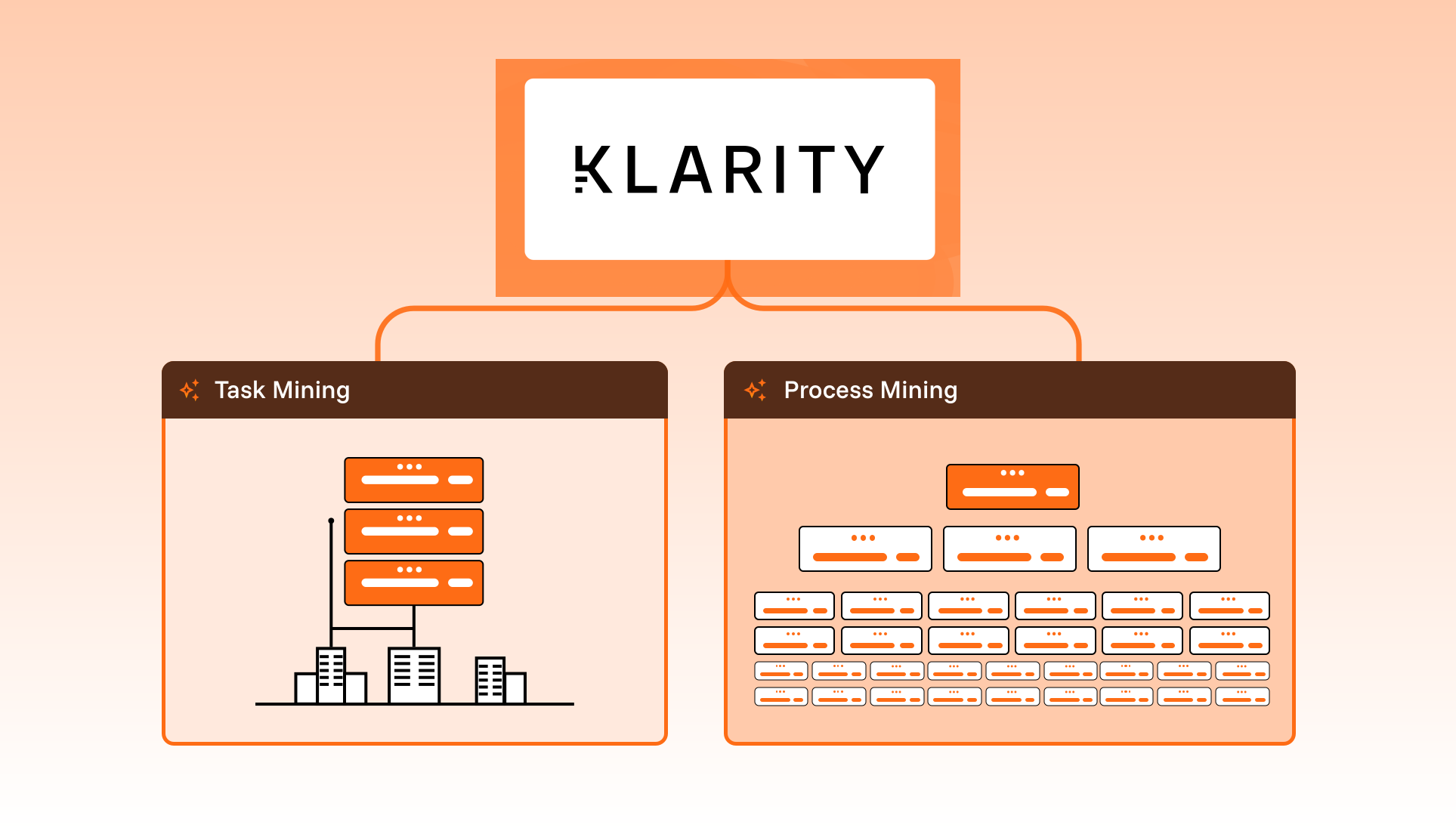
- AI-led observation captures how work actually happens across every application — manual workarounds, skipped steps, decision patterns, exception handling.
- AI-guided interviews uncover the “why”: the tribal knowledge and judgment calls that live in people’s heads.
- Both streams are synthesized in parallel across hundreds of employees, without pulling anyone off the line or requiring integration.
- The result is a structured, living operational map that identifies exactly where improvements are possible and how to execute them.
Proof in the Field
What This Puts in Your Hands
Speed Becomes the New Alpha
Structural synergies planned for month 12 can begin in month 3. Carve-outs that normally spend six months figuring out how to operate independently can have that answer in the first week. For Operating Executives, this is the difference between a transformation that fits within a hold period, and one that does not.
A Stronger Exit Story
Buyers no longer want binders of process documentation. They want a living capability: a company that knows how it operates, surfaces inefficiencies in real time, and continuously improves. This changes the exit conversation, and the exit multiple.
A Repeatable AI Value-Creation Engine
Most AI deployments stall because nobody has mapped how the business actually operates. Without that foundation, impressive demos become disappointing production outcomes. Discover process knowledge first. Then apply AI. Skip the first step, and the second collapses.
Seizing the AI Advantage
The Operating Executives who will win are treating the discovery bottleneck as a problem worth solving and not a cost of doing business. Early movers are building institutional knowledge and muscle that later adopters will struggle to replicate. The door is wide open. The only question is when you walk through it.
*The views expressed here are our own and do not represent the positions or practices of The Carlyle Group or any specific portfolio company.