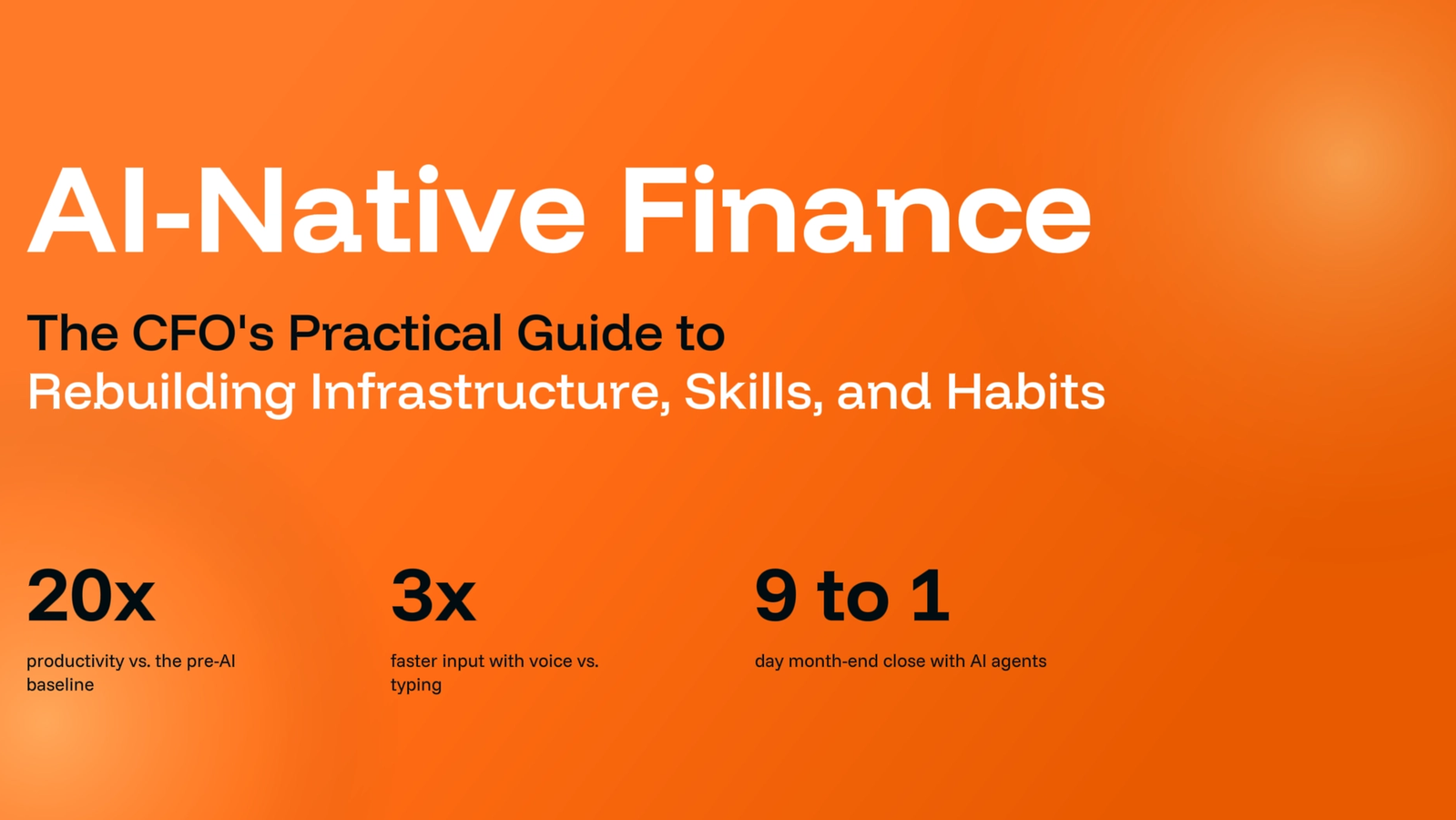
There was a moment in 2025 where something fundamentally shifted. For years, AI had been exciting in theory — especially for engineering and code generation — but for every other business function, the productivity gains felt incremental. Maybe 10 or 20 percent better. Promising, but not transformative.
Then, almost overnight, that changed. Finance leaders who had been watching AI from a cautious distance are now building what some are calling an AI-native finance function — not a department that uses AI as a side tool, but one where AI is woven into how work actually gets done, every single day.
Why "AI-Native" Is Different From "AI-Fluent"
Most finance teams have dabbled with AI. They've used ChatGPT to draft emails, maybe run a few queries through Gemini. That's AI-fluent — the same workflows, slightly faster.
AI-native is something different. The key distinction: a chatbot uses an LLM to produce text. An agent uses an LLM to actually do work. Agents can use Excel. They can run code. They can query your Slack channels, pull from Google Drive, update your ERP, and return a synthesized answer — all in response to a single prompt.
The AI Adoption Assessment
Where is your finance team today?
Pre-AI
1×
Performing tasks without meaningful use of AI. Standard pace. Human-only output.
AI-Fluent
1.2×
Using tools productively and consistently. Faster outputs, same workflows.
AI-Native
20×
Rebuilt workflows with AI as a core operating layer. Permanent step-change.
AI-Native is not just using AI more. It’s rebuilding how work gets done, with AI as the foundation.
The CFOs who are furthest ahead aren’t asking “how can AI assist my team?” They’re asking “how do I rebuild how my team works, from the ground up, with AI as a core operating layer?”
The 20x AI Operating System: A Leadership Framework
The companies seeing the biggest results have developed what they internally call a 20x AI Operating System — a set of principles and practices designed to produce a permanent shift in how work gets done, not a one-time initiative.
Three Leadership Principles
The management layer that makes the operating system stick
01
Managers lead from the front
Every manager uses AI daily in their own work — and shows their team how. Not champions in all-hands. Practitioners at the desk.
→
AI Fridays: weekly team reviews of where AI is being used and where it isn’t.
02
Dedicate time to experimentation
One hour, blocked company-wide each week. Real tasks, not sandbox exercises. The goal: can AI do the first 80% of this?
→
When ideas flow bottom-up from ICs, the operating system is working.
03
Raise the bar starting with hiring
AI fluency is a rated dimension in interviews. Ask candidates to share screenshots of their actual AI conversations — not self-assessments.
→
Headcount gate: every hire request requires a 2–4 week AI-first memo.
One counterintuitive finding: recent graduates and early-career hires often onboard fastest. They don’t have ten years of muscle memory telling them how long things should take. They just use the tools to get to the outcome.
The Building Blocks: Your AI-Native Tech Stack
Beyond leadership principles, there’s a practical infrastructure layer every AI-native finance function needs. Think of these less as specific products and more as capability categories — eight of them, each unlocking a different dimension of how AI integrates into day-to-day work.
Eight Building Blocks
The capability categories every AI-native finance team needs
🎙️
Voice Input
Speak 3× faster than you type. Streams of consciousness produce far better AI outputs than carefully worded one-liners.
🧠
Skills
Containerize institutional knowledge. A flux analysis skill knows your thresholds, formatting, and data sources — available to everyone on day one.
🔌
Connectors
Give AI access to Slack, Google Drive, NetSuite, SharePoint. A question about last week’s budget review doesn’t require a human to find the thread.
📁
Projects
Sustained context for multi-week initiatives. Year-end close, board deck, system migration — the AI understands the full initiative, not just the last message.
📄
Artifacts
Board presentations, variance analysis, reconciliation summaries — generated, not drafted. Humans review and refine. No longer create.
🔍
Deep Research
Reads hundreds of sources, synthesizes across them, returns a structured report in 20–30 minutes. What a human analyst would spend most of a day on.
🖼️
Vision
Take a screenshot and pass it in. AI redesigns layouts, identifies errors, and explains what it sees — powerful for financial models and reports.
🏗️
Shared Infrastructure
Centralized databases, knowledge bases, and MCP servers that give AI programmatic access to your systems. Built in partnership with IT.
A note on governance: functional leads own their skills, not IT. The person who understands the most about a function is the one who maintains its AI skill. Skills are available to everyone on the team — a new hire benefits from your most senior analyst’s accumulated knowledge on day one, without bothering anyone.
Building Shared Infrastructure: Where Finance and Technical Teams Partner
Individual productivity tools have limits. The biggest step-function gains come when finance leaders partner with a technical function to build shared infrastructure: centralized databases AI agents can query, knowledge bases that accumulate institutional context, and MCP servers that give AI programmatic access to your systems.
The point isn’t to make finance teams into engineers. The most valuable AI workflows require a partnership between someone who deeply understands the business problem and someone who can wire up the technical plumbing. Finance leaders who build those partnerships will move significantly faster than those who go it alone.
A Real Example: The One-Day Close
Here’s what this looks like in practice. A finance team working toward a one-day month-end close — down from nine days — using an AI-native workflow:
The AI-Native Month-End Close
From 9 days to 1 — AI handles the high-volume, rule-based work
AI Agent
Recurring Journal Entries
Handles high-volume, rule-based entries via MCP connector to NetSuite at machine speed
AI Agent
Accruals & Variance Checks
Prepares accruals from templates, runs variance checks against prior periods, flags anomalies
From 9 days to 1. Skilled humans focus on what actually requires their judgment.
Traditional close timeline: 9 days·With AI agents: 1 day
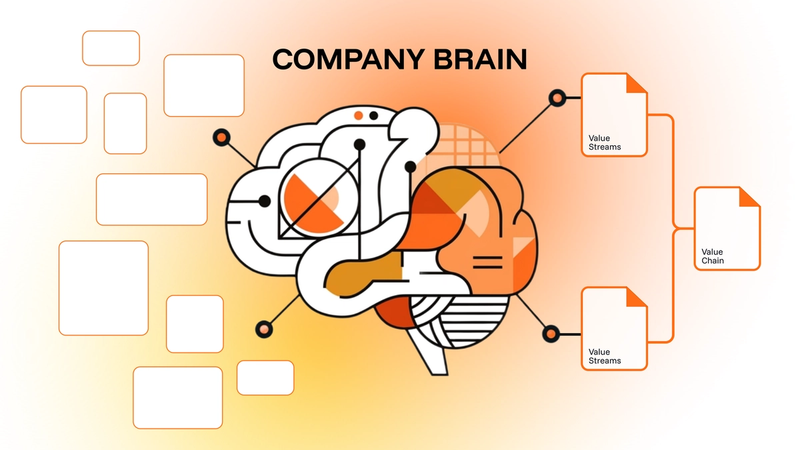
The map of exactly which tasks go to agents, which go to humans, and which go to human reviewers of agent output — that’s what a context graph of your finance function makes possible. And it’s a map worth building.
Getting Started
The pattern across organizations that have successfully built AI-native finance functions is consistent:
Start with the leadership layer — managers have to use this daily before they can coach it.
Build the individual skills layer — identify the two or three most repetitive, high-stakes workflows in your function and create skills for them.
Invest in shared infrastructure — find the connectors and databases that will make those skills dramatically more powerful.
And above all: start messy. The teams seeing the best results aren’t the ones with the most elegant pilot program. They’re the ones that decided the first 80% was good enough to learn from, and started learning.
Frequently Asked Questions
What does it mean to build an AI-native finance function?+
An AI-native finance function is one where AI agents are embedded into core workflows — not used occasionally as a productivity shortcut, but integrated into how the team operates every day. This means using AI for document generation, variance analysis, research, knowledge management, and process automation, with humans focused on judgment, review, and relationship-intensive work.
What is the 20x AI Operating System?+
The 20x AI Operating System is a framework for building AI-native teams. It combines three leadership principles (manager ownership, structured experimentation, and raising the hiring bar) with eight individual-level building blocks (voice input, skills, connectors, projects, artifacts, deep research, vision, and shared infrastructure) to systematically shift how an organization works.
What AI tools should CFOs and finance leaders use?+
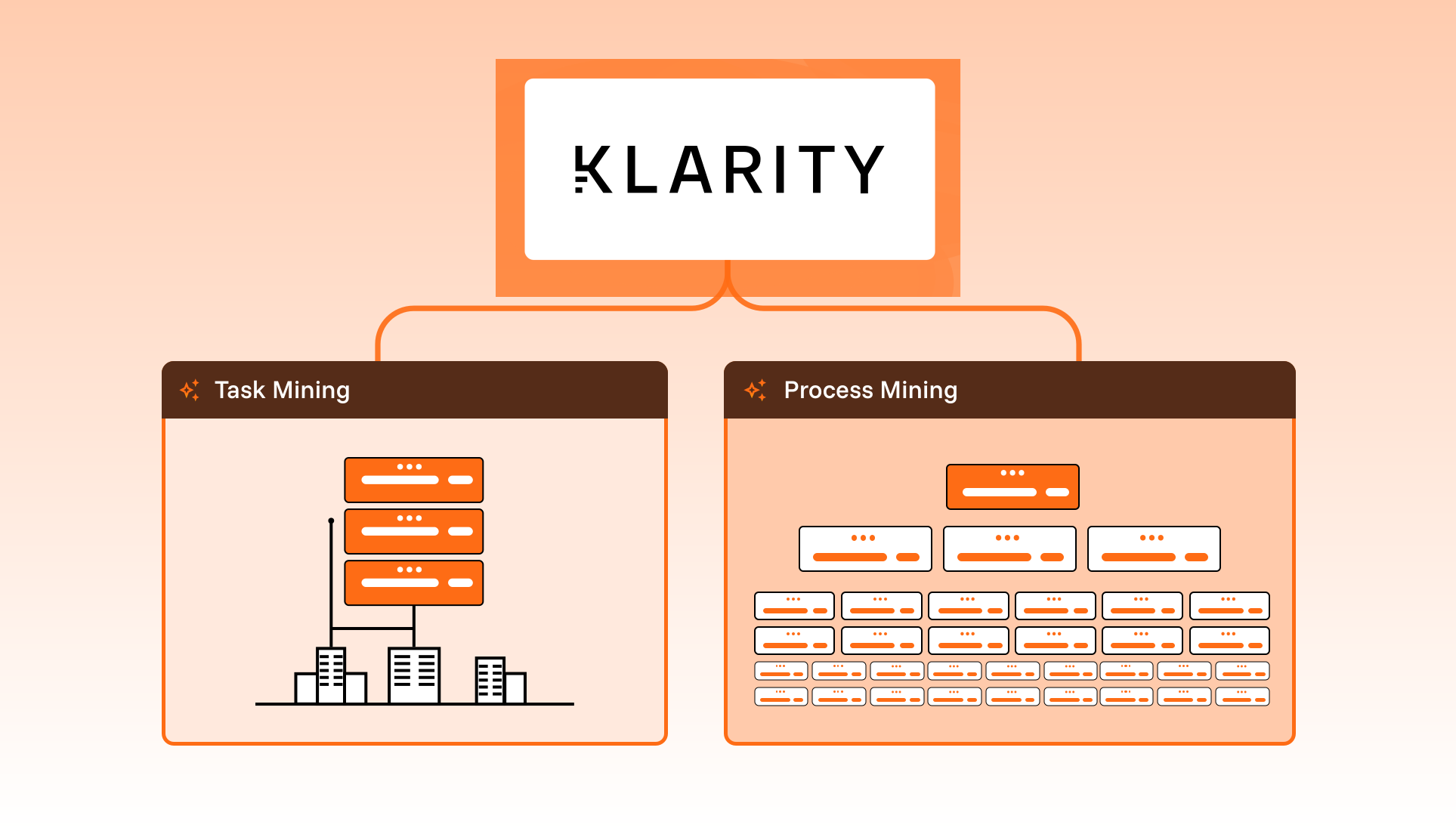
The most effective AI-native finance teams use enterprise AI platforms (Claude, ChatGPT, Gemini), voice input tools, and skills and connectors built on those platforms to give AI access to internal systems like Slack, Google Drive, NetSuite, and SharePoint. Klarity’s Companion and Advisor agents sit on top of these tools to map workflows and identify automation opportunities.
What is an AI skill in the context of enterprise AI?+
An AI skill is a set of instructions given to an AI agent that teaches it how to perform a specific, repeatable organizational task — such as a flux analysis, an infosec questionnaire, or an order form workflow. Skills containerize institutional knowledge so that any employee can access it without needing to consult a subject matter expert.
What is a context graph in AI?+
A context graph is a structured map of how an organization operates — all its tasks, decisions, approvals, and processes, and how they relate to each other. Klarity builds a context graph from observed work and uses it to help organizations identify where AI can be applied most effectively.
How can AI help finance teams achieve a faster month-end close?+
AI agents connected to an ERP (such as NetSuite via an MCP connector) can handle recurring journal entries, prepare accruals using established templates, run variance checks against prior periods, and flag anomalies for human review — compressing the manual portion of a close. Organizations have used this approach to reduce month-end close timelines from nine days to one.
Klarity
See how Klarity works for your team
Klarity maps how your enterprise actually operates — and drives continuous improvement across every function.